
Chess Unleashed: How AI Shattered Limits and Changed the Game Forever

Chess is a captivating dance of intellect and strategy, where 32 pieces glide across 64 squares, creating an infinite tapestry of moves and countermoves. The chessboard transforms into a battlefield, pitting two minds against one another in a quest for supremacy. To emerge victorious, players must delve into the intricacies of the game, mastering positional understanding, strategic foresight, and tactical prowess. For humans, this journey is a marathon that can span a lifetime, filled with lessons learned through countless matches and experiences. Yet, for computers, this once-daunting challenge appears to be a puzzle with a rapidly approaching solution, as they harness the power of artificial intelligence to redefine the boundaries of chess mastery.
The story begins, as all stories do, with a curious mind. Arthur Samuel, a visionary mathematician, was interested in teaching computers how to think. However, in the 1950s, there was limited computing capabilities and programming was labor intensive. With the use of an IBM 701 computer, Samuel embarked on the journey not only creating the program but laid the foundation for machine learning and artificial intelligence.
Samuel’s program employed a reinforcement learning approach. It was designed to utilize the outcomes of its games as feedback to learn. The evaluation function assessed the board positions and assigned numerical values based on factors such as piece advantage and board control. Through trial and error, the program became strong enough to defeat even the most experienced players.
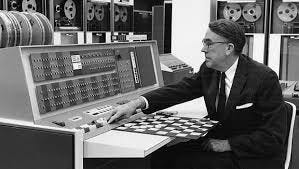
While checkers was solved, applying the same method to more complicated games, e.g. chess, was difficult. There were a few key challenges when applying the same process to chess. Firstly, there was a lack of data efficiency. In traditional reinforcement learning, the methods are data hungry, requiring enormous datasets to effectively train. Researchers needed to figure out a way to have the program learn faster from fewer games. Secondly, there is state space complexity. In chess, there are 10^120 possible combination of games – called the ‘Shannon number. Due to the large number of games, it is impractical to simulate all possible combination, not to mention expensive. Thirdly, chess requires that players look at moves 4 or 5 steps down the line. Therefore, the feedback required for reinforcement learning is delayed and not as apparent. Because of these issues, when the computer went head-to-head with a chess grandmaster, the computer was unsuccessful, until 1997.
In 1980s, researchers and engineers at IBM began collaborating to put together the best, chess-playing computer program that could rival human grandmasters. The computer, named Deep Blue, had specialized hardware design with advanced algorithms that enabled it to evaluate millions of positions per second. It employed traditional chess strategies with a combination of brute-force search and sophisticated evaluation functions to discern the best moves.
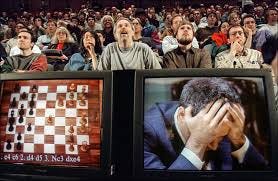
Deep Blue's multiple parallel processing architecture and custom evaluation functions gave it the power and efficiency needed to challenge even the greatest players. In 1997, the reigning World Champion, Garry Kasparov—widely regarded as the greatest chess player of all time—accepted a six-game match against Deep Blue. Kasparov had dominated the chess world for over 20 years, and few believed a machine could defeat him. However, history was made when Deep Blue won the match. This victory marked an inflection point in AI history.
Yet, it wasn’t without controversy. After the first game, which Kasparov won, the second game of the match left him rattled. Deep Blue made a seemingly irrational move—one that Kasparov attributed to human intervention rather than the machine's own calculations. Believing the machine had been assisted, Kasparov lost his confidence and went on to lose the match 2½–3½. He later accused IBM of cheating, suggesting that human programmers had interfered mid-match. IBM denied the allegations, but the controversy remains part of the lore surrounding Deep Blue’s triumph. Despite Kasparov’s protests, Deep Blue’s victory was a watershed moment, demonstrating that computers could not only rival but surpass human capabilities in a game as complex as chess.
As with all technology, researchers were not content to stop at Deep Blue. With the dramatic rise in computational power over the following decades, new algorithms entered the chess arena. Two of the most notable were Stockfish and AlphaZero.
Stockfish continued the tradition of brute-force calculation, but with a significant innovation: alpha-beta pruning. Alpha-beta pruning is an optimization technique for the minimax algorithm used in decision-making processes, particularly in two-player games like chess. It works by eliminating branches of the game tree that cannot influence the final decision, thus reducing the number of nodes evaluated. This allows the algorithm to search deeper and more efficiently, leading to better strategic choices without compromising optimality. With alpha-beta pruning, Stockfish was leagues ahead of human players, regularly defeating grandmasters.
Meanwhile, Google’s DeepMind introduced a revolutionary new algorithm that stepped up to challenge StockFish. AlphaZero does not employ traditional chess strategies, at least not like StockFish did. AlphaZero learns chess by employing a self-learning approach. It begins by playing games against itself, starting with completely random moves. With each identified winning strategy, the program improves its gameplay. AlphaZero’s success came from combining neural networks with Monte Carlo Tree Search, a method that allowed the algorithm to explore potential moves more intelligently. Within hours, AlphaZero mastered chess without any prior knowledge of the game, learning purely from experience.
Naturally, as the grandmasters were no challenge, the next step was to pit AlphaZero against StockFish to see which is the best program. In a series of 100 games, AlphaZero had a winning record against StockFish; 28-0-72. Rather than following traditional chess principles, AlphaZero often made moves that surprised both its opponent and human observers.
These moves were not necessarily the most obvious or "best" according to conventional chess wisdom, but they proved to be highly effective in the context of the game. For example, AlphaZero was observed making "unorthodox" openings, such as the King's Gambit, which had largely fallen out of favor in modern chess. However, AlphaZero was able to use these openings to create dynamic and complex positions that challenged Stockfish's evaluation and decision-making capabilities.
AlphaZero’s victory over Stockfish wasn’t just another milestone in chess AI—it was a glimpse into the future of human and machine collaboration. By learning and evolving in ways that humans could not have anticipated, AlphaZero showed us that AI is capable of more than following the paths we’ve already mapped out. It challenges conventional wisdom and opens doors to entirely new possibilities. The journey from Arthur Samuel’s early machine learning program to AlphaZero’s self-taught brilliance illustrates how far we've come in developing algorithms that not only solve complex problems but redefine how we approach them. As we look ahead, the question is no longer whether AI will surpass human capabilities in specific domains, but how we can harness these systems to explore new frontiers together—whether in chess, science, or the boundless landscape of creativity and innovation.